Same Song, Different Universe: How Concert Setlists Rewire the Way You Hear Music
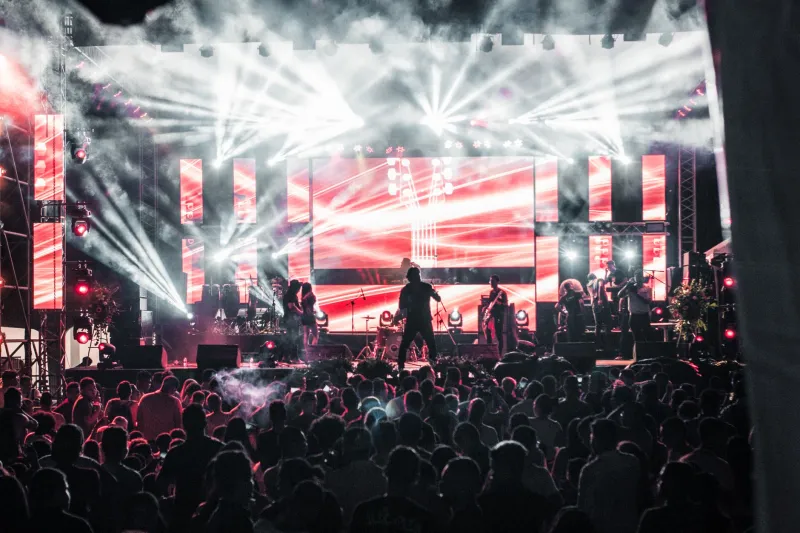
You've listened to the album a hundred times. You know every breath, every pause, every lyric that comes in three seconds before you expect it. You could hum the track order in your sleep. And then you go to the show — and somewhere around the fourth song, something shifts. The artist plays a deep cut you've always thought of as low-key, almost forgettable, and suddenly it's the most devastating thing you've ever heard. The crowd around you feels it too. People are grabbing each other's arms. Someone near you is openly crying.
What just happened?
The short answer: the setlist did its job.
The Album Is a Room. The Setlist Is a Roller Coaster.
When a record is sequenced, the artist and their team are thinking about a specific kind of listening experience — one that's mostly solitary, often headphones-in, and completely at the listener's own pace. You can skip tracks. You can repeat them. You can pause and come back. The album is designed to hold up under that kind of intimate, non-linear attention.
A live setlist operates under an entirely different logic. You can't skip ahead. You can't rewind. You're moving through it in real time, surrounded by hundreds or thousands of other people who are all having their own version of the same experience simultaneously. That changes what "order" actually means.
"When I'm building a set, I'm thinking about energy arcs," says one touring musician who has performed across club circuits in cities from Nashville to Seattle. "The album sequence is about the story I wanted to tell in the studio. The setlist is about the story I want to tell to a room of people who are standing up, who are tired, who might have had a couple drinks, who came here specifically to feel something big."
Those are different stories. And they require different arrangements.
Why Placement Changes Everything
Sound engineers who work live shows talk about something called "emotional positioning" — the idea that where a song sits in a set determines how the audience receives it, sometimes more than the song itself does.
Imagine a slow, aching ballad. On an album, it might come after a mid-tempo track, functioning as a kind of exhale. In a live show, that same ballad placed directly after the loudest, most chaotic moment of the night hits completely differently. The silence that follows the noise becomes part of the song. The crowd's collective breath-holding becomes an instrument.
"I've mixed the same artist's set on different nights where they switched just two songs," says one live sound engineer based out of Chicago who has worked festivals across the Midwest. "The audience response was genuinely different. Not slightly different — genuinely different. One version of the set had people locked in from that moment forward. The other version, they kind of drifted for a few songs before reconnecting. Same songs. Different order."
This is the setlist effect in its most mechanical form: position creates context, and context creates meaning.
The Communal Listen vs. The Private One
Here's what the solo listening experience can't replicate, no matter how good your headphones are: you cannot manufacture the feeling of discovering something alongside strangers.
There's a particular kind of music fan moment that comes up constantly in concert-goer communities — the "I finally got it" story. Someone has a song they've always liked fine, maybe even loved, but it never fully cracked them open. Then they see it performed live. Maybe it comes in an unexpected spot in the set. Maybe the artist introduces it differently than the listener imagined. Maybe the crowd's reaction reframes what the song is even about. And suddenly, in that room, with those people, it clicks in a way it never did through a speaker.
"I'd heard 'Holocene' by Bon Iver probably fifty times before I saw them play it," one concertgoer from Minneapolis told us. "I thought I knew that song. But they played it toward the end of the set, after all this buildup, and the whole room just went completely still. I understood something about it that I hadn't before. It felt like the song was finally explaining itself."
This is the communal listen. It's not just that you're hearing the song in a new order — it's that you're hearing it with people, and their presence amplifies what the music is doing. The setlist, in this sense, is a social document. It's designed for a crowd, not a listener.
Artists Know Exactly What They're Doing
The most obsessive setlist fans — and they exist, in very dedicated corners of music communities — will tell you that their favorite artists treat the setlist like a living, breathing thing. Phish has famously never played the same setlist twice in decades of touring. Beyoncé's Renaissance World Tour was so precisely sequenced that fans mapped the emotional architecture of the show like a piece of theater. Taylor Swift built the Eras Tour around a specific nostalgic journey that had nothing to do with release chronology and everything to do with emotional movement.
These aren't accidents. Artists who have been doing this long enough understand that the live show is its own medium — as different from the album as a film adaptation is from a novel. The raw material might be the same, but the experience of consuming it is fundamentally transformed.
"A setlist is a conversation," says one musician who has been touring for over a decade. "The album is a letter. The show is when you're actually in the room with the person."
What This Means for How We Talk About Music
For music communities like the ones that form around shared listening experiences, the setlist conversation is one of the richest ones out there. When fans compare notes after a show — which song hit hardest, which moment surprised them, which transition felt like a gut punch — they're doing something that streaming stats and algorithm-curated playlists can't touch. They're processing a shared experience.
If you've ever felt like a song meant more to you after a show than it did before, you weren't imagining it. The setlist rewired your relationship with that song. It gave it new context, new neighbors, new emotional weight. And the fact that you felt that in a crowd of other people who were feeling it too? That's not just a concert memory. That's the whole point of music in the first place.
Next time you're heading to a show, pay attention to the order. Not just which songs they play — but when. Notice what comes before and after your favorite. Notice how the crowd shifts. Notice what the room does in the spaces between.
That's where the real setlist is written.