Ditch the Algorithm: A Real Fan's Guide to Finding Your Music Tribe
Let's be honest about Discover Weekly. It's clever. It's occasionally great. And it has introduced a lot of us to artists we genuinely love. But there's something a little hollow about getting your musical horizons expanded by a machine that's ultimately optimizing for your engagement, not your growth.
The algorithm knows what you've liked. It does not know what you need. And it definitely can't replicate the experience of finding a community of people who are just as obsessed with a niche sound as you are — people who will text you at midnight because a band just announced a tour, who will argue passionately with you about a B-side, who will hand you a record and say trust me on this one.
If you're ready to break out of the recommendation loop and find something more real, here's where to start.
Understand Why the Echo Chamber Happens
Streaming algorithms are built on a feedback loop. You listen to something, you signal approval (by finishing it, saving it, adding it to a playlist), and the system serves you more of the same. Over time, your recommendations get narrower and more refined — which feels like personalization but is actually a slow drift toward a smaller and smaller slice of what's out there.
This isn't a conspiracy. It's just how the math works. The problem is that some of the most rewarding music experiences come from genuine surprise — from someone whose taste you trust pushing you toward something you'd never have found on your own. Algorithms can approximate that. Human community does it better.
Go Where the Nerds Are (Online)
The internet is full of extremely passionate music communities that have nothing to do with streaming platforms, and they are absolutely worth your time.
Reddit remains one of the best places to find genre-specific rabbit holes. Subreddits dedicated to jazz, experimental electronic, classic country, shoegaze, Chicago house, and hundreds of other genres are full of people who have spent years going deep. The conversation quality varies, but the recommendations are often genuinely off the beaten path.
Rate Your Music (RYM) is less flashy than Spotify but has one of the most serious music-nerd communities on the internet. Its genre taxonomy alone is a treasure map. If you want to understand where a sound came from and what else lives in that corner of the music world, RYM is invaluable.
Discord servers have quietly become one of the best places for real-time music community. Many artists, labels, and genre communities run active servers where fans share new finds, discuss releases, and organize around local shows. Search for your favorite artist or genre plus "Discord" and you'll likely find something.
And of course, communities like CommonTunes are built specifically for this — connecting fans who want to go beyond passive listening into actual conversation and discovery.
Get Back in the Room: Local Venues and Record Stores
No amount of online community fully replaces the experience of being in a physical space with other people who love music. And the good news is that the local live music scene across the US is more alive than the streaming era might make you think.
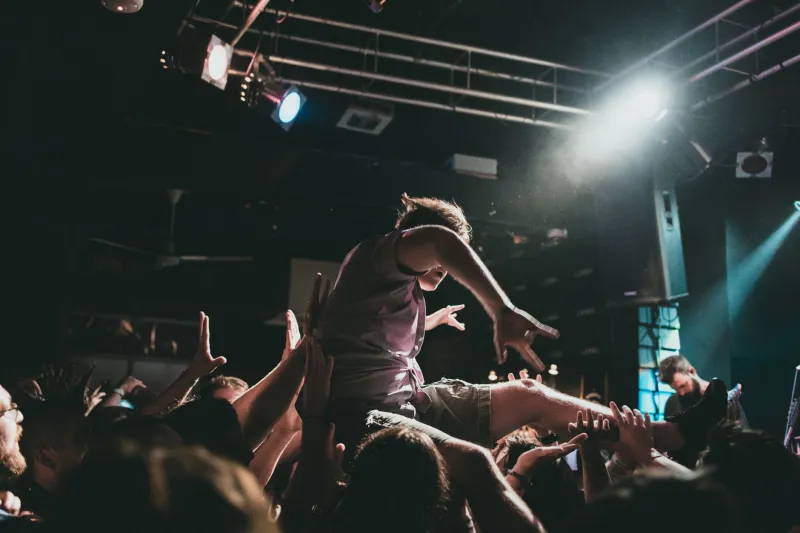
Small venues — the 200-capacity rooms, the dive bars with stages, the art galleries that host shows on weekends — are where music communities actually form. You see the same faces. You start talking. You find out about the next show. This is how it's always worked, and it still works.
Record stores are the other anchor of local music community, especially the independent ones. Shops like Amoeba in LA, Reckless Records in Chicago, or Waterloo Records in Austin aren't just retail spaces — they're community hubs. Staff picks, in-store performances, bulletin boards with show listings, and conversations with employees who have spent their lives going deep on music. These places are worth supporting and worth spending time in.
If you don't know where to start in your city, sites like Bandsintown and Songkick are useful for finding shows, but talking to people at a record store will get you further faster.
Follow the Writers, Not Just the Artists
Music journalism and criticism have fragmented dramatically over the past decade, but that fragmentation has also created a lot of genuinely interesting voices writing about music in newsletters, blogs, and independent publications.
Substack has become a surprisingly rich home for music writing. Plenty of critics and obsessives publish newsletters about specific genres, regional scenes, or niche corners of music history. Finding a writer whose taste aligns with yours — or interestingly diverges from yours — is one of the best ways to consistently find new music and context for it.
Music blogs still exist, and the good ones are still essential. Sites covering specific scenes, like those focused on underground hip-hop, ambient music, or regional folk traditions, often surface artists years before they get mainstream attention. A quick search for blogs covering your favorite genres will turn up more than you expect.
Be the Person Who Shares, Not Just Receives
Here's a shift that makes a real difference: stop thinking of yourself as a consumer looking for recommendations and start thinking of yourself as a participant in a community.
Share the music that moves you. Post about it on CommonTunes. Start a collaborative playlist and actually invite people to add to it. Show up to a forum thread and contribute rather than just lurking. Recommend an opener you loved to the person standing next to you at a show.
Community is reciprocal. The more you put into it — your taste, your enthusiasm, your willingness to be wrong about something — the more you get back. The algorithm can't do that. It can only reflect you back at yourself.
The best music discoveries of your life probably won't come from a machine. They'll come from a person who cared enough to say hey, you need to hear this. Go find those people. They're out there, and a lot of them are already here.