Grooves, Static, and Intention: What Young Music Fans Are Really Saying When They Buy Vinyl
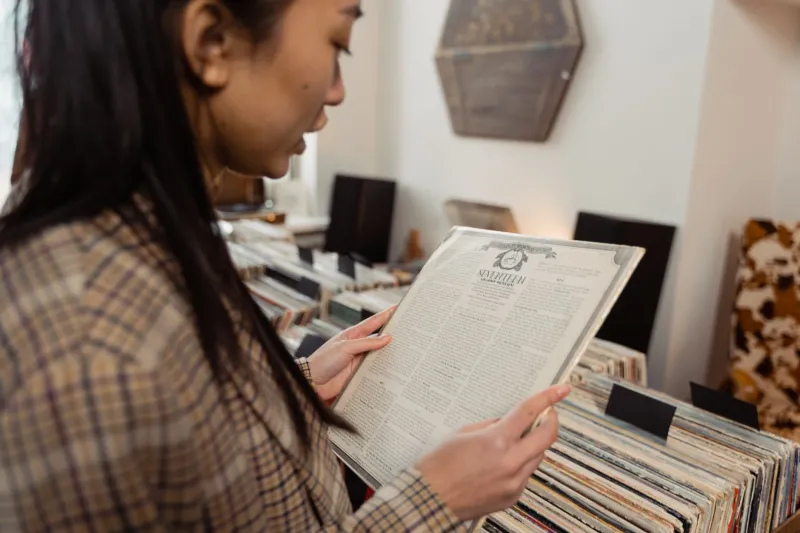
Record Store Day lines in 2024 looked different than anyone would have predicted twenty years ago. Mixed in with the older collectors flipping through crates were twenty-two-year-olds in vintage band tees, holding copies of Olivia Rodrigo and boygenius albums, chatting with strangers about turntable setups. These weren't people raised on vinyl. These were people who chose it — deliberately, sometimes expensively, in a world where every song ever recorded is available in your pocket for ten dollars a month.
So what exactly is going on?
The resurgence of physical music formats — vinyl most visibly, but also cassettes and even CDs — among younger listeners is one of the more genuinely interesting cultural shifts happening in music right now. And it's not really about sound quality, despite what the audiophile corners of the internet would have you believe. It's about something deeper and more communal than that.
The Algorithm Gave Us Everything and Made It Feel Like Nothing
Streaming is extraordinary in ways that are easy to take for granted. Any song, any artist, any era — instantly available, perfectly curated, endlessly reshuffled. For pure access to music, there has never been a better time to be alive.
But something got lost in the abundance. When everything is available at zero friction, the act of listening stops meaning very much. You don't choose a record because you have to commit to it. You don't sit with an album because skipping to the next thing costs you nothing. The music becomes wallpaper — beautiful wallpaper, maybe, but wallpaper nonetheless.
Younger fans who came of age entirely inside streaming culture have started pushing back against this, and physical formats are the most tangible form that pushback takes. Buying a record is a statement that this music matters enough to own. Playing it is a commitment — you're sitting down, you're flipping sides, you're engaging with the sequence the artist intended. The friction is the point.
Owning Something Real in a World of Licenses
There's also a practical reality lurking underneath the aesthetic one: you don't actually own the music in your streaming library. You're renting access. When a label pulls an album from a platform — which happens more than most listeners realize — it's just gone. When a service shuts down or raises prices or changes its licensing agreements, your "collection" changes with it.
Vinyl collectors have always understood this implicitly. The record in your hand cannot be revoked. It cannot be removed from a catalog update. It doesn't require a subscription to play. In a cultural moment where so much is temporary and platform-dependent, there's something genuinely radical about owning an object that contains music.
This resonates especially hard with Gen Z, who came of age watching digital things disappear. Vine died. SoundCloud almost died. Tumblr imploded. The idea that your relationship with music could be severed by a corporate decision doesn't feel paranoid to people who've watched it happen to other things they loved.
The Ritual Is the Thing
Ask someone who's gotten into vinyl in the last few years what they love about it and they'll often struggle to articulate it in purely logical terms. They'll talk about the warmth of the sound, sure, but they'll also talk about the ritual. Taking the record out of the sleeve. Cleaning the surface. Placing the needle. Sitting down — actually sitting down — while the music plays.
This is intentional listening, and it's increasingly rare. In a world of multitasking and background playlists, choosing to do nothing but listen to a record is almost a countercultural act. It's time you've set aside specifically for music, which is a thing music fans used to do automatically and now have to fight for.
Cassettes have their own version of this. There's a whole generation of younger listeners buying tapes not because they sound better — they don't — but because the format creates constraints that feel freeing. You can't shuffle a cassette. You experience the album as a linear journey, the way the artist sequenced it. Side A and Side B become distinct moods. The limitations become features.
Communities Built Around Physical Music
Here's where this connects to something beyond individual listening habits: physical formats are inherently social in ways that streaming isn't.
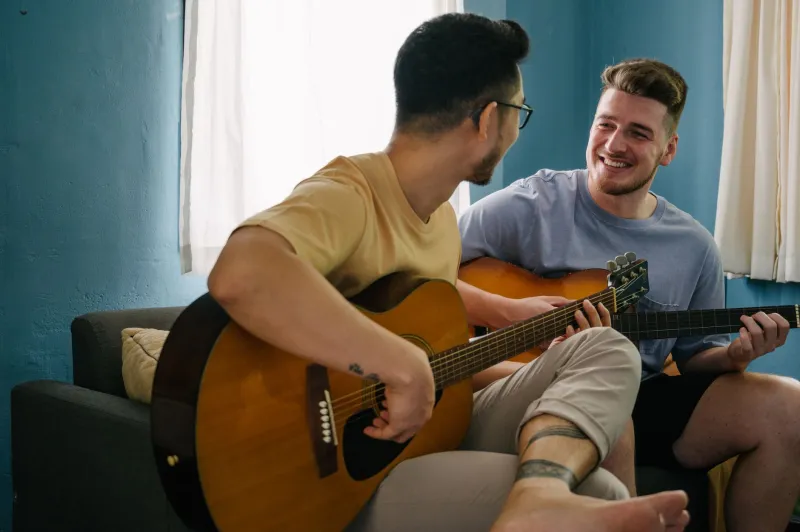
You can't show someone your Spotify library in the same way you can pull a record off a shelf and hand it to them. You can't flip through someone's digital collection at a party. But crate digging with a friend, or walking into someone's apartment and scanning their record wall, or trading tapes in a parking lot after a show — these are community-building experiences. They create conversation. They reveal something about who you are and what you value.
Record stores have become genuine gathering places for this reason. Not just retail spaces, but community hubs where people with shared tastes find each other. The CommonTunes spirit — music as a way of finding your people — is alive and well in every independent record shop where strangers bond over a shared obsession with a deep cut from a 1970s soul record.
Online communities built around physical music formats have followed the same logic. Vinyl collectors trade recommendations, share photos of their setups, and geek out over pressing variants with the same energy that any passionate music community brings to the music itself. The format becomes a shared language.
Not Nostalgia. Something Else.
It would be easy to dismiss all of this as nostalgia — young people romanticizing an era they never experienced. But that framing misses what's actually happening. These listeners aren't trying to live in the past. They're using the past's tools to solve a present problem: how do you make music feel meaningful again when it's been made frictionless?
The answer, it turns out, is to reintroduce the friction deliberately. To choose the format that slows you down, makes you commit, and gives you something real to hold. To build a collection that says something about who you are in a way that a streaming algorithm never could.
The vinyl rebellion isn't about rejecting technology. It's about refusing to let convenience be the only thing that matters. And in a music culture that sometimes feels like it's optimizing for everything except depth, that refusal is worth paying attention to.