When Two Worlds Collide and Nothing Catches Fire: The Collab Letdown We Refuse to Admit
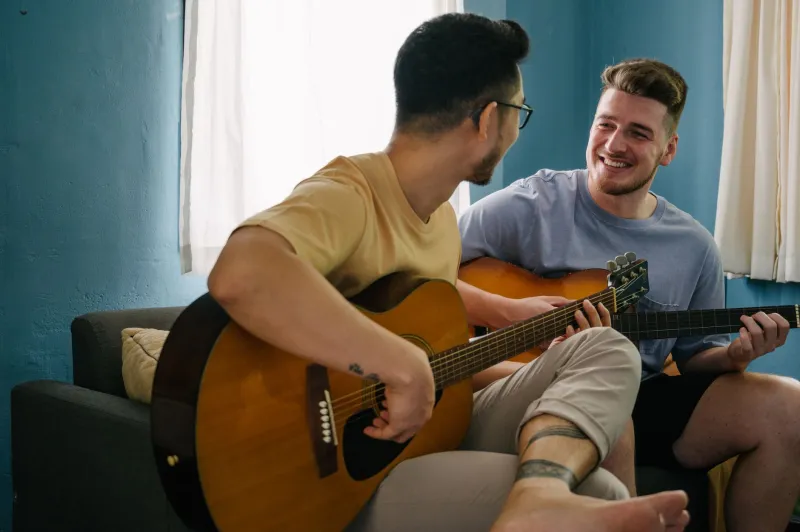
The announcement drops and the internet loses its mind. Two artists — both beloved, both with passionate fan bases — are releasing a joint project. Maybe it's a single. Maybe it's an EP. Maybe it's a surprise feature buried in an album tracklist. It doesn't matter. The anticipation is identical: pure, uncut excitement that convinces everyone involved this is going to be the thing.
And then it comes out. And it's... okay.
Not bad, exactly. But not the seismic event everyone imagined. The chemistry that seemed so obvious on paper doesn't quite translate to the recording. The song is competent. The fans say it's amazing. And somewhere in the back of everyone's head, a small voice asks: wait, is it though?
Welcome to one of music fandom's most reliable and least discussed experiences — the collaboration that doesn't deliver, and the collective psychological gymnastics required to pretend otherwise.
The Hype Machine Has No Off Switch
Let's be honest about what happens in the lead-up to a major collab announcement. Fan communities build elaborate expectations before a single note has been heard. People project their ideal version of the song onto an empty canvas. The artist they love brings everything they love about them. The featured artist brings exactly the right energy to complement that. The production is perfect. It changes both of their discographies.
By the time the actual track drops, it's competing against a fantasy that never existed. Almost nothing could win that fight.
This isn't a new problem, but social media has amplified it in specific ways. When J. Cole and Kendrick Lamar finally appeared on a track together — two artists whose fans had been demanding a collab for years — the reaction was complicated. Some people felt the chemistry was everything they wanted. Others quietly admitted the song felt more like a formality than a revelation. Neither camp was entirely wrong. But the volume of the defending voices drowned out almost everything else.
Or consider the long-awaited moments when pop royalty links up with critical darlings — Ariana Grande collaborations that seemed tailor-made for cultural domination but landed with a softer thud than expected, or hip-hop crossover moments that felt forced in hindsight even when the individual artists were both at their peaks. The pattern repeats across genres, decades, and fan bases.
Why We Can't Just Say It Was Mid
Saying a collab was disappointing feels, to a lot of fans, like a betrayal. Not of the music — of the artist. There's a kind of loyalty baked into fandom that makes criticism feel personal, even when it's directed at a song rather than a person.
Psychologists call this cognitive dissonance reduction. When we love an artist deeply and they produce something that doesn't match our expectations, we experience genuine psychological discomfort. The easiest resolution isn't to adjust our opinion of the artist — it's to adjust our opinion of the song upward until the discomfort goes away. Suddenly the track is "a grower." The verses are "understated." The production is "ahead of its time."
Fan communities can accelerate this process in ways that feel supportive but occasionally tip into groupthink. When everyone in your Discord or subreddit is posting fire emojis, it takes a certain kind of social courage to say I'm not really feeling it. Most people don't bother. They absorb the consensus opinion and move on.
This isn't cynical, necessarily. Communities built around shared love for artists are genuinely warm and connective spaces. But that warmth can create blind spots.
The Collabs That Actually Earned Their Hype
To be fair, some collaborations genuinely deliver — and recognizing the letdowns requires also acknowledging what success looks like. Jay-Z and Kanye's Watch the Throne felt like two massive forces pushing each other rather than coasting. Kendrick Lamar's feature on Taylor Swift's "Bad Blood" remix was... actually that's a useful example of the opposite. The internet went wild. The song was fine. The individual artists were better apart.
When a collab works, you can usually feel why it works. There's genuine friction or genuine harmony — either the artists are challenging each other or they're completing each other's sentences in ways neither could alone. The tracks that fall flat tend to feel like two separate performances that happened to be recorded in the same place. The artists are technically present, but they're not really talking to each other.
What Happens When We Finally Say It Out Loud
Here's the interesting thing: fan communities that can hold space for honest disappointment tend to have richer conversations overall. When someone posts "I love both of these artists but this song didn't do it for me" and that's met with curiosity rather than defensiveness, something useful happens. People start actually analyzing why it didn't work. They talk about production choices, vocal chemistry, thematic coherence. The conversation gets more interesting than another round of unanimous praise.
That's the version of fandom worth building toward — one where loving an artist doesn't require defending everything they touch. Where a disappointing collab can be acknowledged, discussed, and filed away without threatening the larger relationship you have with someone's music.
The best artist communities on platforms like CommonTunes tend to operate this way. Real fans, real opinions, real conversations. Including the ones where someone finally says: I know we were all excited, but honestly? I've played it three times and I'm not going back.
And then everyone quietly admits they feel the same way. And somehow, the artists are still beloved. Turns out loyalty and honesty can coexist just fine.