Fifteen Seconds to Famous: How TikTok Rewrote the Rules of Who Gets Heard

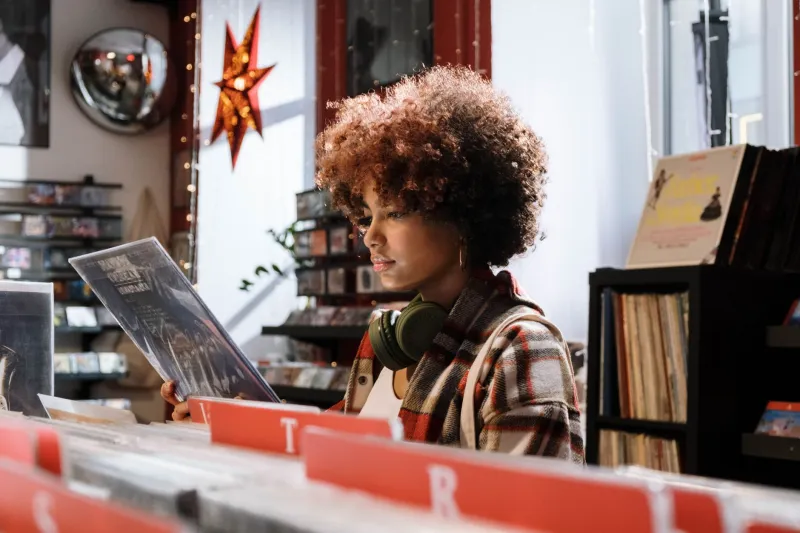
Photo by Photo by @felirbe on Unsplash on Unsplash
Somewhere right now, an artist who played their first show to eleven people is watching their SoundCloud numbers go vertical. They didn't get a label deal. They didn't land a sync placement. They didn't even go on a press run. What they got was fifteen seconds in the background of someone's "get ready with me" video — and that was enough.
This is the TikTok music pipeline in action. And if you haven't thought hard about how thoroughly it's reshaping the way music gets discovered, shared, and ultimately heard, now's a good time to catch up.
The Architecture of a Viral Sound
Let's be clear about what's actually happening when a song blows up on TikTok. It's not a single viral moment — it's an ecosystem. A sound gets attached to a trend. Creators use it. Their followers hear it passively, then actively. Some of them go looking for the full track. They find it on Spotify or Apple Music. They save it. The algorithm notices. The song gets added to editorial playlists. More people hear it. The cycle compounds.
The numbers back this up in ways that would've seemed absurd five years ago. Tracks that trend on TikTok routinely see streaming spikes of 500% or more in the same week. Songs from years or even decades ago — think Kate Bush's "Running Up That Hill" hitting a whole new generation via Stranger Things TikToks — can re-enter the charts as if they were released yesterday.
But the more interesting story isn't the blockbusters. It's the small artists.
The Unexpected Viral: Three Artists Who Didn't See It Coming
Take Levi Turner, a 23-year-old singer-songwriter from Knoxville, Tennessee, who posted a 30-second voice memo of a song he'd written that morning. He captioned it something forgettable. He went to sleep. He woke up to 200,000 views and a comment section full of people asking where they could stream the full version.
"I didn't even have the song finished," he says. "I had to finish writing it and record it in like four days because people were actually waiting for it. That was wild. That's never happened to me before."
That scramble — finish the song, release it fast, capitalize on the moment before the algorithm moves on — is now a standard part of the independent artist experience. The pipeline demands speed in a way that traditional music industry timelines were never built for.
For some artists, the experience is even more disorienting. Mara Chen, a bedroom pop producer from the Bay Area, went viral for a snippet she'd posted almost as a joke — a lo-fi instrumental she'd made in an afternoon. "People were using it for their study videos, their cooking videos, their therapy check-ins," she says. "I had no idea what to do with that. I just kept making music and eventually some of those people became actual fans of my other stuff."
That conversion — from passive sound-user to genuine fan — is the real prize, and it's not guaranteed.
The Fragmented Attention Problem
Here's the tension at the heart of the TikTok pipeline: the platform is optimized for moments, not artists. Users attach to a sound, not necessarily to the person who made it. The 15-second clip that blows up might not even be the best part of the song. And once the trend cycle moves on, so does the audience.
"There's a real difference between having a viral song and having a fanbase," says Dominique Reyes, a music journalist who covers independent artists for several US outlets. "TikTok can give you one without the other. The artists who figure out how to convert the attention into a community are the ones who actually build careers. Everyone else gets a cool story and a weird month."
This is where platforms like CommonTunes start to matter in a new way. When a song hits on TikTok, dedicated listeners are increasingly turning to community spaces to go deeper — to find out what else the artist has made, to talk about the song with people who care about it beyond the trend, to build something more durable than a 15-second loop.
CommonTunes users have started creating "pipeline playlists" — collections that document songs they first heard as TikTok sounds and then went down a full rabbit hole on. They're part discovery log, part fan archive, and part recommendation engine for people who want to get past the clip and into the catalog.
Which Genres Are Winning (And Which Are Getting Left Behind)
Not all music travels equally well through this pipeline. Genres that lend themselves to short, emotionally immediate hooks — pop, bedroom pop, hyperpop, indie folk with a strong lyrical moment — tend to travel well. Music that rewards patience, complexity, or extended listening — jazz, progressive rock, long-form electronic — has a harder time breaking through a 15-second window.
"It's not that TikTok is bad for music," says Reyes. "It's that it's a very specific filter. Some things pass through it easily. Other things don't. And that shapes what gets resourced, what gets made, what gets pushed."
The concern among some music communities is that the pipeline, over time, trains both listeners and artists toward a certain kind of song — front-loaded, hook-first, optimized for the scroll. Whether that's genuinely changing what music sounds like, or whether artists are finding ways to make great work that also happens to travel well on TikTok, is a debate that's very much ongoing.
Discovery Is Still Discovery
For all the hand-wringing, there's something genuinely exciting about what the pipeline has made possible. Artists who would have spent years grinding toward a break are finding audiences in days. Listeners are hearing music they never would have encountered through traditional radio or label-driven channels. Genres and subcultures that used to be invisible to mainstream listeners are getting their moment.
And when those listeners go looking for more — when they follow the sound back to the artist, dig into the catalog, find the community — that's music discovery working exactly the way it's supposed to. Just faster, weirder, and in fifteen-second increments.
The pipeline might be new. The impulse behind it — I heard something and I need to find more — is as old as music itself.