Every Word Counts (Or Does It?): The Great Lyrics Divide Splitting Music Fans Right Now

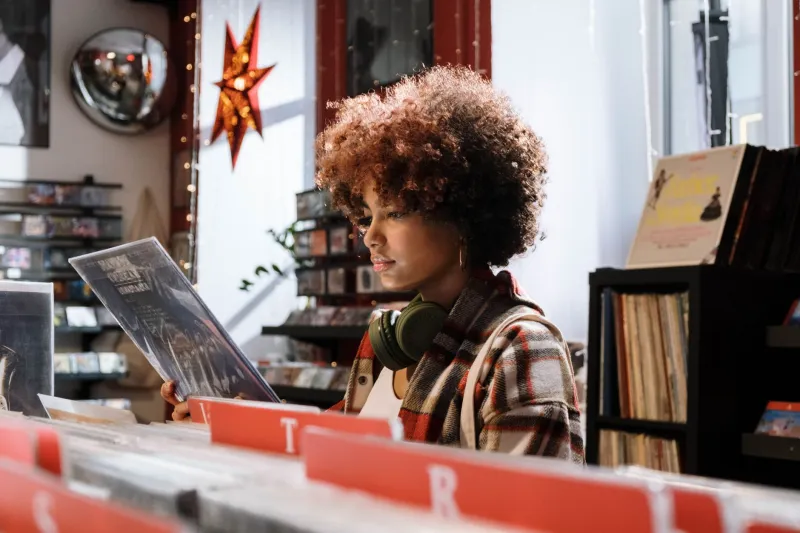
Photo by Photo by Ashley Whitlatch on Unsplash on Unsplash
It started, for a lot of people, with Spotify adding synchronized lyrics to the app. Suddenly, the words were just there — scrolling in real time, line by line, whether you wanted them or not. For one type of listener, this was a revelation. For another, it was mildly ruining everything.
That tension — between the lyric-obsessed and the vibe-first crowd — has been brewing in music communities for a while. But as lyrics have become more accessible than ever, from Genius annotations to Apple Music's word-for-word displays to entire TikTok ecosystems built around lyric breakdowns, the divide has sharpened into something worth actually examining.
Two Ways of Loving the Same Song
Let's meet the two camps, because both are operating in genuine good faith and neither is being irrational.
On one side: the close listeners. These are the fans who pull up Genius before they've finished their first listen. Who pause a song to reread a couplet. Who build their entire relationship with an artist around what the artist is saying. For them, lyrics are the architecture — everything else is the decoration.
"I've been annotating on Genius since I was like fifteen," says Priya, a 26-year-old grad student from Boston. "For me, a song isn't complete until I understand every reference, every wordplay, every callback to something the artist said in an interview three years ago. That's not overthinking. That's just how I engage with music I love."
On the other side: the vibe-first listeners. These are the fans who couldn't tell you the exact words to their favorite song but could describe precisely how it makes them feel. Who think the emotional texture of a voice matters more than the semantic content of what it's saying. Who sometimes feel like close reading strips a song of its mystery.
"I genuinely don't want to know what every lyric means," says Derek, a 31-year-old from Austin who plays in a band himself. "Some songs work because they're slightly blurry. The moment you pin every word down, it becomes a poem you're analyzing instead of a song you're living in. I'd rather feel it than decode it."
Both of these people love music deeply. They just love it differently.
What Genius Changed (And What It Didn't)
Genius — the lyrics annotation platform that's been running since 2009 — didn't invent lyric obsession. People have been poring over Bob Dylan liner notes and debating Springsteen metaphors since long before the internet. But it did something significant: it made close reading social.
Suddenly you could see how other fans interpreted a line. You could add your own reading. You could argue about whether a reference was intentional or coincidental. Lyrics became a conversation instead of a private experience.
This is where it gets interesting for music communities. Genius turned lyric analysis into a collaborative act — which is exactly the kind of thing CommonTunes users do instinctively. Threads in the forums regularly go deep on a single song, with users pulling apart meaning, context, and craft with the kind of enthusiasm most people reserve for sports analysis.
"There's a thread about a Kendrick Lamar song that's like 200 replies long," says one CommonTunes moderator. "People are bringing in historical context, personal experience, production notes. It's basically a graduate seminar. And it's completely voluntary."
But not everyone wants the graduate seminar.
The Case Against Knowing Everything
There's a legitimate argument — made by musicians and listeners alike — that over-analysis can flatten the experience of music. That some songs are deliberately ambiguous, and that ambiguity is part of what makes them resonate across different people and different moments.
The songwriter Phoebe Bridgers has talked about intentionally leaving her lyrics open-ended so that listeners can bring their own meaning to them. Thom Yorke of Radiohead has famously expressed discomfort with detailed lyric interpretation, suggesting that the emotional truth of a song can exist independently of — or even in spite of — its literal meaning.
"I think there's a real loss when you insist on a definitive reading," says Marcus Webb, a music critic based in Nashville. "Part of what makes a great lyric great is that it holds multiple truths simultaneously. The second you decide it means this one specific thing, you've closed off everything else it could mean."
This is the vibe-first crowd's strongest argument, and it's worth taking seriously. The mystery of a great lyric isn't a bug. For a lot of songwriters, it's the entire point.
Real-Time Lyrics: Feature or Interruption?
When Spotify rolled out synchronized lyrics — words scrolling in time with the music — the reaction in music communities was genuinely split. Some users loved the immediacy of it, the feeling of being guided through a song word by word. Others found it distracting, a visual layer that competed with the purely sonic experience.
"I turned it off immediately," says Derek. "I don't want to read a song. I want to hear it."
"I leave it on for everything," says Priya. "It's like having the sheet music in front of you. It makes me feel more inside the song, not less."
What's fascinating is that neither of these experiences is wrong — they're just different modes of listening, and the feature essentially made that difference visible in a way it hadn't been before.
Can Both Camps Coexist?
In music communities, this divide shows up in interesting ways. On CommonTunes, you'll find playlists built entirely around lyrical content — songs grouped by a recurring image, a specific kind of metaphor, a theme that only reveals itself when you're reading closely. You'll also find playlists described purely in terms of feeling: "for driving at night," "sounds like early autumn," "put this on when you need to not think."
Both are valid. Both are beloved. And increasingly, the most interesting listeners seem to be the ones who can move between the two modes — who can lose themselves in the texture of a song and also, when the moment calls for it, pull up the lyrics and go deep.
"I think the real divide isn't between people who read lyrics and people who don't," says Webb. "It's between people who think their way of listening is the only valid one. The listeners I find most interesting are the ones who can hold both."
Somewhere between the annotation and the feeling, between the close read and the closed eyes, is probably where the best listening actually lives. The lyrics are there if you want them. The vibe is there if you don't. Music, to its credit, doesn't care which way you come at it — it just asks that you show up.