High Art, Low Art, No Rules: Why Your Chaotic Streaming History Is Actually a Flex

The Annual Reckoning Nobody Asked For
Every December, like clockwork, Spotify Wrapped shows up uninvited and starts reading your diary out loud. For a lot of music fans, it's a moment of genuine panic — not because the numbers are wrong, but because they're completely, humiliatingly right. There you are: someone who spent three hours last Tuesday arguing in a CommonTunes thread about the overlooked genius of Arthur Russell, and your top artist is a pop star whose song you can't even remember actively choosing to play.
The impulse to screenshot only the flattering parts is real. But here's the thing: that instinct to curate, to hide, to apologize — it's built on a myth. The idea that your taste is supposed to be coherent, that it should tell a clean story about the kind of person you are, is a holdover from a world that no longer exists.
Streaming blew that world apart. And honestly? It's about time.
Where the Snob Mentality Came From
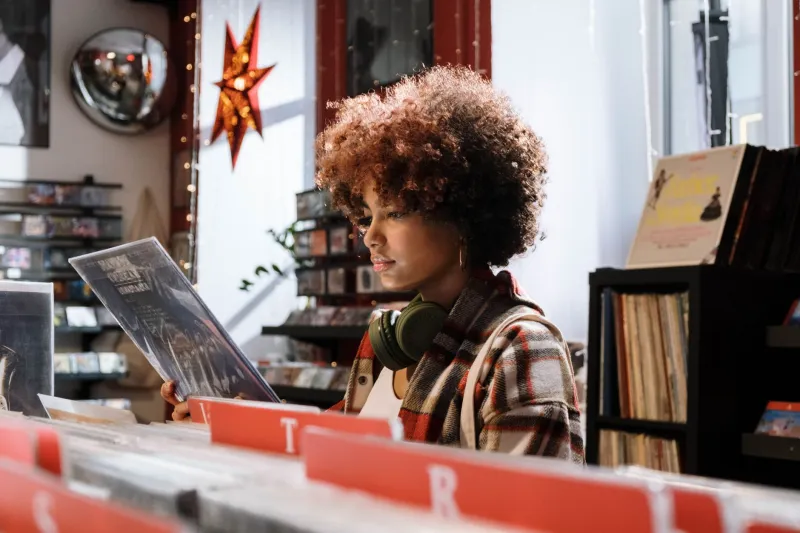
Music hierarchies didn't appear out of nowhere. For decades, the gatekeepers were physical — record store clerks who'd visibly wince at your selections, music critics at Rolling Stone and Pitchfork who handed down verdicts like judges at sentencing, college radio DJs who treated their playlists like sacred texts. The message was consistent: some music was serious, and some music was for people who didn't know any better.
That mentality filtered into fan communities too. If you loved hip-hop, you were supposed to have strong opinions about which era was the real era. If you were into indie rock, you'd better have discovered your favorite band before they got popular. Taste became a performance, and the performance had rules.
The thing is, those rules were always kind of made up. They were social contracts enforced by people with something to prove. And streaming — with its frictionless access to literally everything — has made those contracts almost impossible to honor.
When the Algorithm Refuses to Stay in Its Lane
Here's what happens when you listen to Coltrane at work, Charli XCX on your commute, and a three-hour bluegrass playlist while you cook dinner: the algorithm watches all of it, learns nothing clean about you, and starts making genuinely weird recommendations that occasionally turn out to be perfect.
That's not a bug. That's the actual shape of how most people listen to music in 2025.
In a recent CommonTunes community discussion thread, user @velvetbassline posted their Wrapped results half as a joke — classical at the top, then a K-pop group, then a Texas country singer with about forty thousand monthly listeners. The response wasn't mockery. It was recognition. Dozens of members replied with their own equally chaotic combinations, and the thread turned into a genuinely great music discovery session, with people explaining the emotional logic behind each unexpected pairing.
That's the thing taste snobs miss: the connections between so-called high and low listening aren't random. They're personal. They're emotional. And they're often more revealing than a perfectly curated collection of critically approved records.
The 'Guilty Pleasure' Is a Scam
Let's be direct about this: the phrase 'guilty pleasure' is doing a lot of dirty work for a concept that deserves to be retired. Guilt implies wrongdoing. What exactly is the crime? Enjoying something that somebody else decided wasn't serious enough?
When CommonTunes member @prairiesynth described her love of both Joni Mitchell deep cuts and early 2000s pop-country as 'embarrassing,' several people in the thread pushed back immediately. One response that got a ton of upvotes put it simply: 'Those two things are more related than you think. The production is different. The cultural cache is different. The emotional DNA is basically identical.'
That's the conversation that opens up when you stop apologizing for what you like. You start noticing patterns you'd never see if you were busy performing a cleaner, more acceptable version of your taste.
The Complexity Is the Point
Here's an uncomfortable truth for the gatekeepers: a listener who genuinely loves both Kendrick Lamar and Dolly Parton probably understands more about American music than someone who's kept their listening strictly within one critically approved lane their whole life. Not because breadth is automatically better than depth — it isn't — but because those unexpected juxtapositions force you to ask questions. Why does this work for me? What are these two things actually doing that makes them both hit?
That kind of thinking is how music knowledge actually grows. It's messy, it's non-linear, and it doesn't look great on a carefully curated profile. But it's real.
Streaming data, for all its weirdness, captures something true about the way people actually live with music — in the background, in the foreground, for different moods and different moments and different versions of themselves throughout a single day. A 'coherent' listening history that only reflects one mood, one genre, one projected identity isn't more sophisticated. It's just more controlled.
What Your Weird Wrapped Actually Says About You
If your Spotify Wrapped looks like a fever dream — if there's no obvious through-line between your top artists, if you're genuinely surprised by some of your own numbers — that might be the most honest portrait of you as a listener that's ever been produced.
The CommonTunes community runs on exactly this kind of complexity. The best conversations here aren't the ones where everyone already agrees on what's good. They're the ones where someone says 'okay, I know this sounds weird, but hear me out' and then draws a line between two things nobody had thought to connect before.
Your chaotic streaming history is full of those lines. The embarrassing parts especially. Don't hide them — follow them. You might be surprised where they lead.