We Killed the Guilty Pleasure and Honestly Good Riddance
Let me tell you about the summer I stopped being embarrassed.
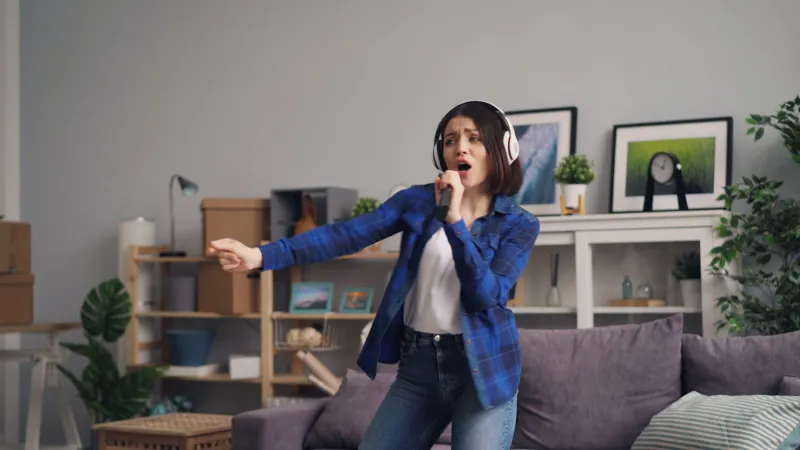
I was 28, standing in my kitchen, absolutely losing it to a Shania Twain song I'd been secretly playing on repeat for three weeks. Not ironically. Not as a bit. Just genuinely, privately obsessed. And it hit me: I had been treating this feeling — this real, physical, joyful reaction to a song — like something I needed to hide. From whom, exactly? My empty kitchen?
That was the moment the concept of the guilty pleasure started to feel not just unnecessary, but kind of absurd.
I'm not alone in this. Something has shifted in American music culture over the last few years, and it goes deeper than just people being more open online. The guilty pleasure, as a concept, is quietly collapsing — and the reasons why tell us something genuinely interesting about how we're relating to music, to each other, and to the whole exhausting performance of taste.
What "Guilty Pleasure" Was Really About
Let's be honest about what the guilty pleasure actually was. It wasn't about quality. It was about social positioning.
Calling something a guilty pleasure was a way of saying: I know this isn't respectable, but I like it anyway. It was preemptive self-defense — you got to enjoy the thing while also signaling that you were aware of its supposed inferiority. You were in on the joke. You weren't one of those people who liked it unironically.
The whole mechanism depended on there being a consensus about what was respectable music and what wasn't. And for a long time, that consensus existed — enforced by critics, by record stores with attitude, by the social cost of being caught with the wrong CD in your car.
Streaming quietly dismantled all of that. When your entire listening history lives in an algorithm that doesn't judge you, when you can play literally anything without anyone seeing you pull it off a shelf, the social infrastructure of musical shame starts to erode. And once it started eroding, people began to notice how arbitrary it had been all along.
The Algorithm Accidentally Freed Us
Here's the irony: the same streaming platforms that get criticized for flattening musical culture may have done something genuinely liberating for individual listeners. When everything is equally accessible and equally invisible, the only metric left is whether you actually enjoy something.
Spotify Wrapped made this weirdly public. Every December, millions of people post their most-listened-to artists and songs, and the results are always more honest — and more varied — than anyone's curated public persona would suggest. Classical music fans with a secret Nicki Minaj obsession. Indie purists whose most-played song is from a Disney soundtrack. Death metal heads whose Wrapped reveals a deeply felt relationship with early 2000s pop-country.
And here's what happened when people started posting these: almost nobody got roasted. Instead, the response was usually recognition. Oh my god, me too. The confession became a connection point.
This is the thing about music that gatekeeping culture always got backwards. The songs that hit us the hardest — the ones we play when we're sad, or driving alone, or need to feel something specific — those aren't usually the prestige picks. They're the songs that snuck past our defenses. The ones that got to us before we could decide whether we were supposed to like them.
Taste Was Never the Point
I want to be clear about something, because this argument gets misread sometimes: rejecting the guilty pleasure isn't the same as saying all music is equally good or that criticism doesn't matter. You can still have opinions. You can still think some music is lazy or derivative or cynically made.
What's changing is the social performance of taste — the idea that what you listen to is primarily a statement about who you are as a person, and that listening to the wrong thing is a kind of moral failure.
Music fans who've grown up inside streaming culture seem to have a much easier time holding two things at once: this song is objectively not very sophisticated and this song makes me feel something real and I'm not going to pretend otherwise. That's not lowering your standards. That's just being honest.
And honesty, it turns out, is way more interesting to talk about than taste.
The Unexpected Connections
Some of the best conversations in music communities right now are happening around exactly this — the songs and albums that don't fit someone's stated identity but matter to them anyway.
We asked CommonTunes readers to share the music they used to hide, and what we got back was genuinely moving. A 34-year-old jazz musician in Chicago who said a specific Carly Rae Jepsen album got him through his divorce. A 22-year-old who'd been deep in underground hip-hop for years but credited a Dolly Parton record with helping her understand her relationship with her grandmother. A guy who described himself as a "serious music person" and then spent three paragraphs talking about how a particular Maroon 5 song from 2007 is, without question, the song of his life.
None of these people were embarrassed. They were proud — not of the music specifically, but of their own emotional honesty. And in every case, the response from other readers was the same energy: tell me more about that.
That's the real death of the guilty pleasure right there. Not a trend piece declaring it over, but hundreds of small moments where someone said the honest thing and found out it resonated instead of getting them laughed out of the room.
What This Means for Finding Your People
There's a CommonTunes angle here that feels worth naming directly. When you stop performing taste and start being honest about what actually moves you, you become findable. You become someone with real, specific musical feelings — and those feelings are the signal that connects you to other people who share them.
The person who loves that one embarrassing album from 2003 is out there. The person who cries every time that song comes on is real and probably wondering if anyone else gets it. The music you used to hide is often the most precise map to your people.
Guilt was never the right word for it anyway. What you were feeling wasn't guilt. It was love, a little unguarded. And there's nothing guilty about that.