The Tracks You'd Rescue From a Burning Hard Drive: What Your Keeper Songs Say About You
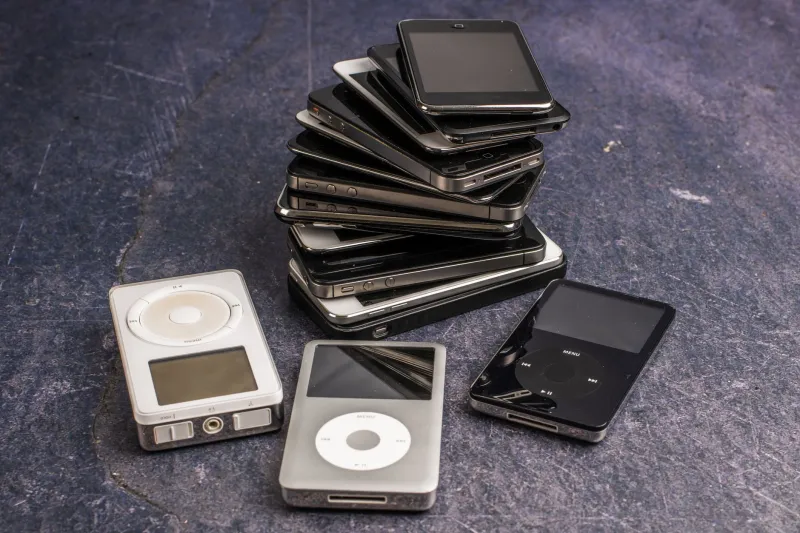
At some point in the last decade or so, you probably stood in an Apple Store — or sat sweating at a kitchen table — watching your old phone's contents migrate to a new one. Contacts, photos, apps. And somewhere in that transfer queue, buried between calendar events and old screenshots, was a song. Maybe a few songs. The ones you made absolutely sure came through.
Not your whole library. Just those ones.
You know exactly which tracks we're talking about.
The Great Digital Migration We Never Talk About
We live in a golden age of access. Spotify alone has over 100 million tracks. Apple Music, Tidal, Amazon Music — the catalog is essentially infinite. So why, in 2024, are people still maintaining local MP3 files? Why are there folks out there with songs ripped from CDs sitting in dusty iTunes libraries, synced to phones through a process that requires a USB cable and what feels like ancient ritual?
Because some songs aren't about access. They're about possession.
There's a meaningful difference between a song you can stream and a song you own — even if that ownership is just a 320kbps file living on your phone's local storage. When a track has been with you through three operating systems, two carriers, and a phone that got dropped in a pool at a Fourth of July party, it's earned something. It's become a keeper.
Think about the logistics people have actually gone through. Hunting down a song that got pulled from streaming. Tracking a version of a live recording that only exists on a fan forum from 2009. Re-purchasing an album on iTunes after it disappeared from your streaming service without warning. People do this. Regularly. For specific songs.
That's not passive listening. That's devotion.
Why These Songs Survive When Everything Else Gets Pruned
Here's the thing about streaming: it encourages disposability. The algorithm is always surfacing something new, something better-matched to your current mood, something that fits the playlist it just generated for you. Your library becomes a revolving door.
But keeper songs operate on a different logic entirely. They're not competing with the algorithm. They've already won.
Psychologists who study music and memory will tell you that certain songs become what's called "autobiographical anchors" — tracks so deeply tied to specific life experiences that hearing them doesn't just evoke a memory, it recreates the emotional state of that moment. The summer you drove across the country. The night everything changed. The year you finally figured something out about yourself.
Algorithms can't manufacture that. Play counts don't measure it. Your Spotify Wrapped will never fully capture the weight of a song you've carried across five different devices.
And honestly? Part of the value is exactly that — the fact that no platform can quantify it.
The Heirloom Theory of Music
There's a word that keeps coming up when music fans talk about these songs: heirloom. It sounds a little dramatic for a digital file, but the instinct is real.
An heirloom isn't valuable because it's expensive or rare in a market sense. It's valuable because of what it carries — history, meaning, continuity across time. Your grandmother's ring isn't irreplaceable because of the gold. It's irreplaceable because of everything attached to it.
Keeper songs work the same way. The MP3 you've had since 2007 isn't just a song. It's a version of yourself you can still access. It's proof that something mattered to you before the algorithm knew you existed.
Some fans in music communities on platforms like CommonTunes describe this almost like a personal archive — a small, curated collection of tracks that represent emotional checkpoints. Not a playlist designed for a mood or a workout or a dinner party. Just songs that have been with them long enough to feel like companions.
What Your Keeper List Actually Reveals
Here's where it gets interesting. Ask someone to name their keeper songs — the ones they'd genuinely panic about losing — and you learn something about them that no streaming profile could tell you.
Some people's lists are predictable on the surface: a song from a formative concert, a track tied to a relationship, something from the exact moment their taste crystallized. But dig a little deeper and patterns emerge.
The person with three different live versions of the same song saved locally? They're not just a fan. They're a scholar of that artist's work. Every performance is a document.
The person with a single obscure B-side from a band nobody else remembers? That song is probably doing enormous emotional heavy lifting. It's a private language.
The person who has the same album ripped from a CD they bought in high school, despite it being available on every platform? They're not being irrational. They're honoring a specific version of themselves.
None of this shows up in your listening stats. It lives in the quiet, unglamorous act of plugging in a cable and making sure something doesn't get lost.
In Defense of the Songs That Ask Something of You
There's a passive way to listen to music and an active one. Passive listening is great — it's what streaming is built for, and there's nothing wrong with letting an algorithm take the wheel on a Tuesday afternoon.
But keeper songs demand active engagement. They require you to notice them, protect them, carry them forward. They ask you to say, explicitly: this one matters.
In a music culture that increasingly optimizes for frictionless discovery and endless novelty, there's something quietly radical about a song that refuses to be replaced. That sits in your library, unchanged, year after year, waiting for the moment you need it again.
The best music communities understand this. The conversations that go deepest — the ones where fans really connect — aren't usually about what dropped this week. They're about the songs that have been around long enough to become part of the furniture. The tracks that have outlasted relationships, cities, jobs, and about four generations of phone hardware.
Those are the ones worth talking about.
So — what's on your keeper list? And more importantly: when's the last time you actually played it?