Your Streaming Stats Are Lying to You (And You Already Know It)

It happens like clockwork. Late November, early December, your phone lights up with a colorful slideshow telling you who you are as a music fan. Your top artist got 47,000 plays. You were apparently in the top 2% of listeners for some band you barely remember putting on during a road trip. Your "sound aura" is something called "sophisticated tranquil."
You screenshot it. You post it. And somewhere in the back of your mind, a small voice says: this isn't really me.
You're not imagining that feeling. And you're definitely not alone.
The Gap Between Streams and Meaning
Here's the core problem with any algorithm-generated music recap: streaming services measure behavior, not feeling. They count plays, not the moments that made you pull over to the side of the road because a song hit too hard. They log repeat listens, not the 11 PM crying session over a breakup ballad you'd be embarrassed to admit you love.
Dr. Alissia Moreno, a music psychologist based out of Chicago who studies how people form emotional attachments to songs, puts it plainly: "Data captures frequency. It doesn't capture significance. The song you played 300 times in the background while you worked is going to outrank the song that changed your life — and those are very different things."
That's the paradox in a nutshell. Your most-played track might be something you used as productivity white noise. Meanwhile, the album that genuinely wrecked you in March — the one you only listened to twice because it was almost too much — barely registers.
The Background Noise Problem
Think about how you actually use music throughout a typical day. There's the commute playlist you've had on shuffle for six months. The "focus" mix you run during work calls. The background music at the gym that you're not really listening to so much as tolerating. All of that gets logged. All of it counts toward your year-end totals.
Members of the CommonTunes community have been talking about this tension for a while. One member, a 29-year-old teacher from Nashville who goes by the handle @velvetunderdog, described it this way in a recent community thread: "My Wrapped said my top genre was lo-fi hip hop. Which, sure, I guess? But lo-fi is just what I put on so my brain will let me grade papers. It's not music I love. It's more like a productivity drug."
Another member, @desertjukebox from Tucson, made the point that the songs that actually shaped her year were almost never the ones that showed up in her recap. "The record that meant the most to me this year, I probably only played it five or six times. But I listened to every single second of it. I was present for it. None of that shows up in the data."
Active Listening vs. Passive Consumption
This is where music psychology gets genuinely interesting. Researchers distinguish between active and passive listening — and the emotional and psychological impact of each is wildly different.
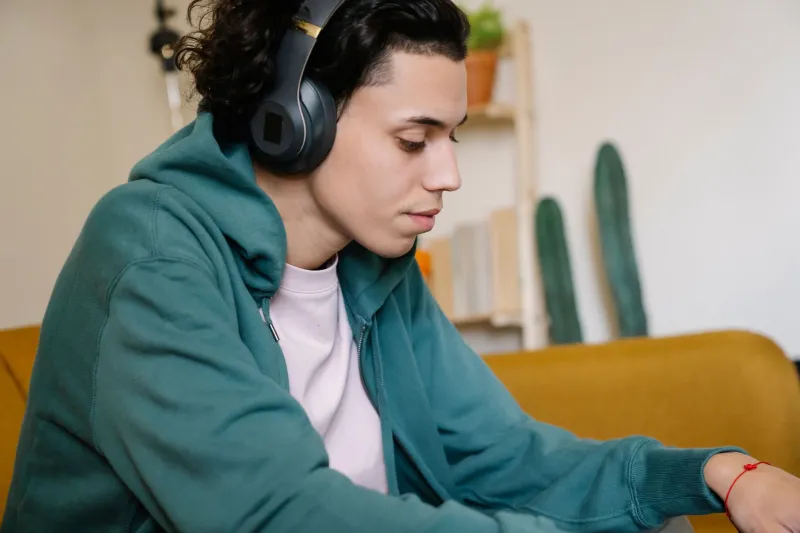
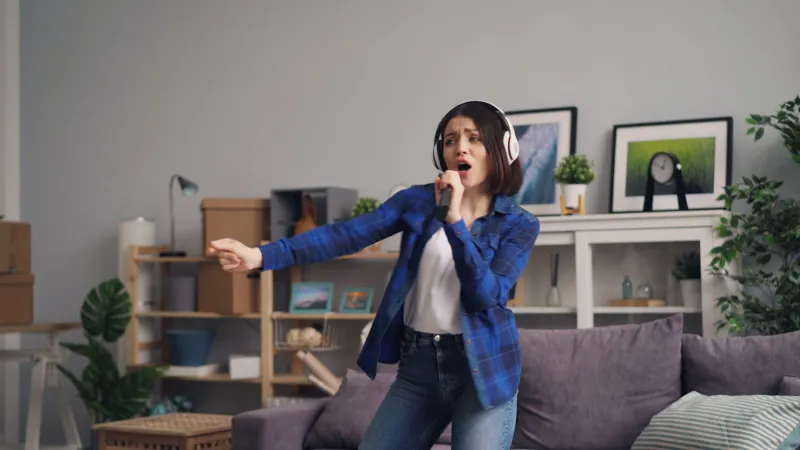
Passive listening is the soundtrack to other activities. It's functional. It might influence your mood without you consciously registering it. Active listening is the opposite: you're present, you're engaged, you're actually inside the music. And according to Dr. Moreno, active listening is where real musical identity gets formed.
"The songs that define us tend to be the ones we chose deliberately," she says. "We sought them out. We sat with them. Those experiences are formative in a way that background streaming simply isn't — but a platform can't tell the difference between the two."
Spotify, Apple Music, Tidal — none of them can measure whether your eyes were closed or open. They can't track whether you were crying or just mildly tapping your foot. The metric is the stream, full stop.
Why We Still Care So Much About Wrapped
So if these recaps are so incomplete, why do we lose our minds over them every year? Why do people post them, argue about them, feel vaguely defensive when their stats don't look "cool enough"?
Part of it is that any mirror — even a distorted one — is compelling. Wrapped gives us a story about ourselves, and humans are deeply wired to want stories. Even if the story doesn't quite fit, it's a starting point for self-reflection.
There's also a social dimension that's hard to ignore. Music identity is something we perform for each other. Sharing your Wrapped is a way of saying this is who I am to your friends, your followers, your corner of the internet. The fact that it's "official" data makes it feel more authoritative than just saying "I've been really into this band lately."
But that performance can also create a weird pressure. If your top artist is someone deeply uncool, or if your listening habits reveal that you spent half the year stress-looping one sad song, the impulse to hide those stats is real. Your authentic musical self gets edited before it even reaches the timeline.
What the Algorithm Misses Most
Let's get specific about the blind spots. Year-end recaps tend to miss:
- The one-time, high-impact listen. The concert recording a friend sent you. The deep cut you found at 2 AM that you played once and never forgot.
- Vinyl and CD listening. If you're spinning records at home, none of that gets counted. For a lot of serious music fans, the most intentional listening happens completely off-platform.
- The songs you couldn't finish. Sometimes a track is too emotionally loaded to get through. That abandoned listen might mean more than a hundred passive replays.
- Shared listening. Music experienced with other people — in the car, at a party, watching a show — often hits differently than solo streaming, but it's counted the same way or not at all.
Building a Truer Picture
So what do you do with this? A few people in the CommonTunes community have started keeping informal "music journals" — just quick notes about what they're listening to and why it's landing. Not every day, not obsessively, just enough to capture the moments that actually matter.
Others have started building what they call "emotional playlists" — not organized by genre or mood, but by specific memories and experiences. The song that was playing when you got the bad news. The album that got you through a hard winter. The track your dad used to play on Sunday mornings.
None of that fits neatly into a streaming recap. But it's probably a lot closer to your real musical identity than whatever your top artist of the year turned out to be.
Wrapped is fun. It's shareable, it's colorful, and it gives us something to talk about every December. But it's a receipt, not a portrait. The music that actually makes you you is living somewhere the algorithm hasn't figured out how to measure yet — and honestly, maybe that's okay.
Some things should stay between you and the song.