Before the Encore: How Concert Setlists Secretly Rewire the Way You Hear Music
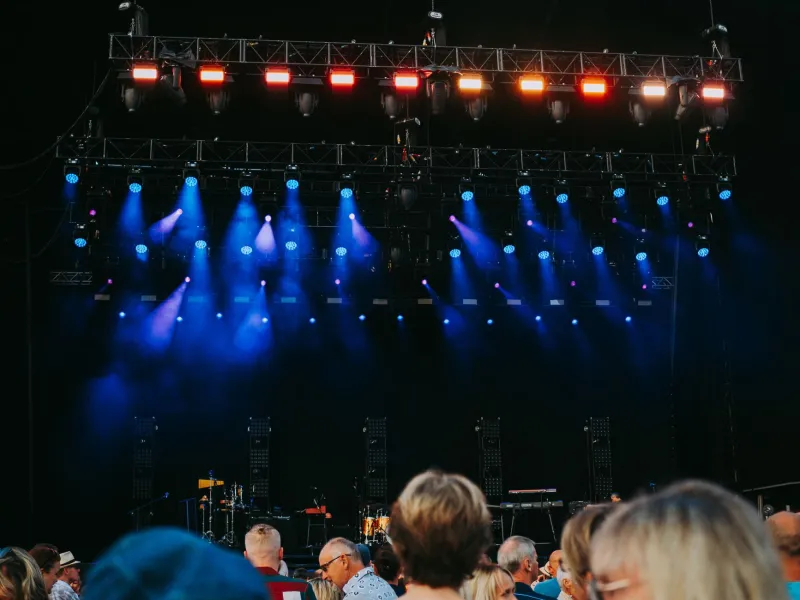
You already know every word. You've heard it on shuffle, on road trips, blasting from your kitchen speaker on a Tuesday morning. But then the band plays it third — right after an absolute gut-punch of an opener — and suddenly that song hits you somewhere completely different. Something shifts. You go home, pull it up on Spotify, and it's not quite the same song anymore.
That's the setlist effect. And if you've ever stood in a crowd and felt it happen in real time, you know exactly what we're talking about.
The Order Is the Message
Most fans think of a setlist as a menu — a list of what you're getting tonight. But musicians and music psychologists will tell you it's closer to a screenplay. The sequence isn't incidental. It's intentional storytelling, and the placement of each track is a creative decision that carries real emotional weight.
Dr. Annaliese Forde, a music cognition researcher based in Chicago, puts it plainly: "When we hear a song in a live setting, we're not just processing the music. We're processing the entire context — what came before it, the energy of the crowd, the physical exhaustion or exhilaration of the moment. All of that gets attached to the song itself in memory."
This is sometimes called emotional tagging. Your brain doesn't just store the melody — it stores the feeling of the room, the sweat on your neck, the stranger next to you losing it completely. And the song that triggered all that? It gets permanently upgraded in your personal music library, whether you want it to or not.
The flip side is just as real. A fan favorite buried mid-set during a low-energy stretch can start to feel like filler, even if it was once a personal anthem. Placement can demote as easily as it elevates.
Why Fans Lose Their Minds Over Setlists
Anyone who's spent time in a dedicated fan community — a subreddit, a Discord server, a Facebook group for a band that's been touring since before you were born — knows that setlist discourse is its own art form. The debates are passionate, sometimes unhinged, and genuinely fascinating.
"I've seen people more upset about a setlist than about the actual performance," says Marcus T., a 34-year-old Phish fan from Vermont who estimates he's attended over 200 shows. "It sounds ridiculous from the outside, but it makes complete sense when you understand what's at stake. The setlist is the emotional roadmap for the whole night. Get it wrong and the whole thing can feel off."
For fans of bands known for rotating setlists — Phish, Radiohead, Arcade Fire, Bruce Springsteen — the pre-show setlist speculation is practically its own hobby. Websites like Setlist.fm have built entire communities around tracking, rating, and analyzing what bands choose to play and when. And the post-show discussion? Even more intense.
Part of what makes this so emotionally loaded is that live music is one of the few truly shared experiences left in a world of algorithmic personalization. Everyone in that arena heard the same song in the same moment. The setlist becomes a collective memory, and when it's great, it bonds strangers in ways that are hard to explain to people who weren't there.
The Songs That Changed After the Show
Ask any serious concert-goer which songs live performances permanently altered for them, and you'll get answers fast.
Jordan P., a 28-year-old from Atlanta, says Phoebe Bridgers playing "Savior Complex" as a closer at a small club show ruined — in the best possible way — how she hears it at home. "It used to be a song I liked. Now it's almost too much. I can't listen to it without remembering exactly where I was standing and who I was thinking about. She didn't change the song. The setlist placement changed the song."
There's a reason artists sweat over where to put certain tracks. Opening with your biggest hit is a statement. Saving it for the encore is a different statement. Dropping it third, just when the crowd has found its footing, is something else entirely. Each choice creates a different kind of memory for the people in the room.
Dr. Forde notes that songs heard at emotional peaks — the moment right before an encore, or immediately following a crowd singalong — tend to be remembered with significantly more intensity than songs heard at neutral points in a set. "Peak-end theory applies here," she explains. "We don't remember events as averages. We remember the peaks and the endings. Smart setlist design accounts for that."
Building Your Own Setlist Brain
Here's the thing about the setlist effect: once you're aware of it, you can actually use it. If you're heading to a show, pay attention to where in the set certain songs land. Notice how your body responds differently to a familiar track when it follows something heavy versus something light.
And when you get home? Try rebuilding your playlist with setlist logic in mind. Think about arc, not just vibe. Where does the energy need to rise? Where does it need to drop before it builds again? What's your closer?
Fan communities on CommonTunes have been doing exactly this — sharing playlists built around the emotional architecture of live sets, mapping the journey rather than just curating the songs. It's a different way of listening, and once you try it, shuffle feels almost lazy by comparison.
The Shared Memory That Lives in the Tracklist
At the end of the night, after the house lights come up and everyone shuffles toward the exits, something has happened that no streaming platform can replicate. A group of strangers experienced the same music in the same order at the same moment. The setlist was the script, and everyone in that room lived it together.
That's why the debates matter. That's why fans argue about whether the band should have opened with that song or saved it. Because the setlist isn't just a playlist — it's a shared story, and everyone who was there carries a version of it home.
Next time you're at a show, pay attention to the order. Your relationship with those songs may never be quite the same.