Made in the Margins: Why the Next Big Thing Is Probably Recording in Someone's Spare Bedroom
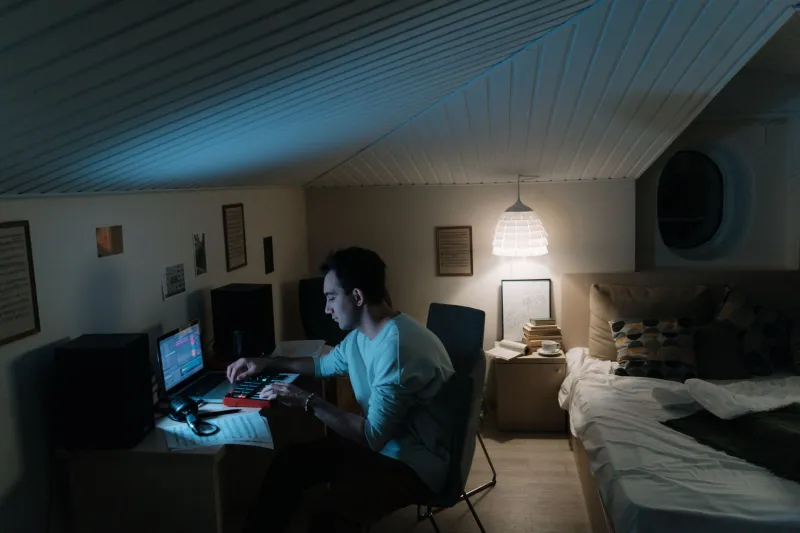
There's a good chance the song you've had on repeat this week was made in a room that also holds a futon and a pile of laundry. Not a joke. Not a romantic exaggeration. Just the current reality of how music gets made — and more importantly, how it gets found.
The bedroom producer isn't a new concept. People have been cobbling together home studios since the cassette four-track era. But something different is happening right now, and if you've been paying attention to the artists popping up in your feeds and friend recommendations, you've probably already felt it. The gap between "some person making music alone" and "artist with a real audience" has never been smaller. And the music community is driving that shift more than any label ever could.
The Setup Is Cheaper. The Ceiling Is Gone.
A decade ago, getting professional-sounding audio required either serious money or serious connections — preferably both. Today, a laptop, a decent USB microphone, and a subscription to a digital audio workstation can get someone surprisingly close to what major studios were producing in the early 2000s. That's not hyperbole; that's just where the technology landed.
Producers like Finneas — who helped craft Billie Eilish's early catalog in his childhood bedroom in Los Angeles — showed the mainstream what was possible. But Finneas had a famous sister and industry proximity. The more interesting story now is the artist with neither of those things who's still pulling tens of thousands of monthly listeners because they figured out how to connect directly with the people who needed to hear what they were making.
Platforms like SoundCloud, Bandcamp, and even TikTok have become genuine discovery engines, not just promotional tools. When a bedroom artist drops something that resonates, the audience doesn't wait for a label to validate it. They share it themselves. They add it to playlists. They bring it here, to communities like this one, and say you have to hear this person.
The Day Job Isn't a Setback. It Might Be the Point.
Here's a reframe worth sitting with: a lot of the bedroom producers gaining traction right now aren't trying to quit their jobs. Some of them are teachers, nurses, warehouse workers, baristas. And rather than that being a limitation on their artistry, it's actually shaping the music in ways that listeners can feel.
There's an authenticity that comes from making music with nothing to lose commercially. No label breathing down your neck about release schedules. No A&R rep suggesting you soften the edges. No pressure to pivot toward whatever sound is testing well with focus groups this quarter. The artist who makes music on weekends because they genuinely can't not make it is operating from a completely different place than someone managing a career.
Fans pick up on that. Maybe not consciously, but they do. There's a reason underground communities rally so hard around artists who feel unpolished in the right ways — who sound like they're talking directly to you rather than performing for a room full of industry people.
What This Does to the Gatekeepers
Traditional label infrastructure is not disappearing overnight. Distribution deals, sync licensing, radio promotion — these still matter, especially at certain scales. But the gatekeeper's power has eroded in a very specific and meaningful way: they no longer control the first point of contact between an artist and an audience.
That first contact now happens in comment sections, Discord servers, Reddit threads, and shared playlists. By the time a label expresses interest in a bedroom artist, that artist often already has a community that trusts them. Which means the negotiating dynamic is completely different than it used to be. The artist isn't auditioning for relevance. They already have it.
Labels have adapted, to their credit — many now use streaming data and social metrics to identify artists who've already built organic audiences, essentially letting the fan community do the A&R work for them. It's efficient, if a little cynical. But it also means the fan community has real power in this ecosystem. When you share a track, add someone to a collaborative playlist, or post about an artist nobody's heard of yet, you're participating in a system that can genuinely change that person's life.
The CommonTunes Effect
This is where music communities become something more than just a nice place to hang out. Platforms built around shared listening and collective discovery — places where people bring artists to each other — are functioning as a kind of distributed A&R department. Not in a corporate sense, but in the most organic sense possible: people who love music finding other people who love the same things and saying here, this matters.
The bedroom producer effect is really a fan community effect. The artists are making the music. But the audience is making the career — one playlist, one recommendation, one obsessive post at a time.
So the next time you stumble across someone whose music stops you cold and you can't find much about them anywhere — no Wikipedia page, no press photos, maybe just a Bandcamp link and an Instagram with 400 followers — pay attention to that feeling. You might be early. And being early, in music, is one of the best feelings there is.
Share the track. Tell your people. That's how this works now.